

Find a foot care service near you
Use our Australia-wide directory of high-risk foot services to find the right support, in the right location.
NDSS Helpline
If you’re living with diabetes you probably already know you have a higher risk of developing foot problems, which can lead to the amputation of toes, feet or limbs.
The good news is that with early identification and treatment of these problems, you can significantly lower the chance of this happening to you.
People with diabetes may experience changes in their feet quite suddenly. That’s why it is important to check your feet every day. Maybe have a good look every morning when putting your socks on or use a mirror to see under your feet. If you experience any changes, contact your GP or healthcare professional.
Moderate regular exercise is a good idea for everyone! Walking or light, weight-bearing activity is recommended. Be sure to wear appropriate footwear and find an activity you enjoy – walking with friends, riding a bike, a yoga class or water aerobics are a great place to start. Remember to always check your feet for rubs or wounds after exercising.
If you have or have had a foot ulcer, loss of protective sensation or changes to your circulation, limit your weight-bearing exercises. Visit a trained health care professional prior to commencing any new exercise regime.
Use a moisturising cream to keep your skin healthy but don’t put cream between your toes as this could cause problems. The same goes for talcum powder which, when clogged up, can cause dryness. Talk to your healthcare specialist to find the right product for you.
Only wear socks and shoes that fit well and do not rub against your skin. Make sure your shoes:
Talk to a podiatrist for more information.
Always wear shoes and clean socks when walking or doing physical activity. Shoes protect your feet from sharp objects and injuries. Socks absorb sweat and protect your feet from blisters.
Despite the risks that poor-fitting shoes may pose, footwear offers protection that being barefoot or wearing socks on their own do not. For instance, there is an increased risk of stepping on foreign objects and causing injury from stubbing toes.
Check your footwear every time you put them on. Always check the inside of the shoes with your hand to make sure nothing has fallen inside them. Check that nothing has pierced the sole of the shoe. This could be some glass or a tack.
Remember to wear clean socks to wick away sweat and protect against rubs.
Cutting your nails might seem straightforward but if you are living with diabetes cutting your skin can lead to injuries you may not even be aware of. Your healthcare team can tell you if it is safe for you to cut your own toenails.
Cut nails often but not too short, follow the shape of the nail and use nail clippers. If your nails are too hard to cut, a nail file may also be helpful. Visiting a podiatrist for further care and to help treat ingrown or difficult to cut nails is also a good idea.
Washing your feet every day with mild soap and water helps to keep them clean and prevent infections. Remember to dry all areas thoroughly, including between your toes. Do not soak your feet as this can damage the skin.
Eating well and getting regular physical activity will help you reduce your risk of serious foot problems. If you need to find the right physical activity for you or you want to eat well, talk to your healthcare professional or call the NDSS Helpline on 1800 637 700
If you smoke, quitting is one of the most important things you can do for your health. Especially if you have diabetes. Smoking increases the risk of serious health problems.
Smoking reduces the blood flow around your body, especially to your feet. This can make it harder for foot wounds and ulcers to heal and can lead to amputation (loss of limb).’
With the right help and support you can quit smoking. Use the resources below, or talk to your health care professional for advice on quitting.
Stable blood glucose levels will help to lower the risk of foot problems. If you are having difficulty keeping your blood glucose levels within your target range talk to your GP, credentialled diabetes educator.
Keeping your blood glucose level, cholesterol, and blood pressure in your target range can reduce your risk of foot problems.
Talk to your health professional about your latest results and what you can do if they are outside your target range.
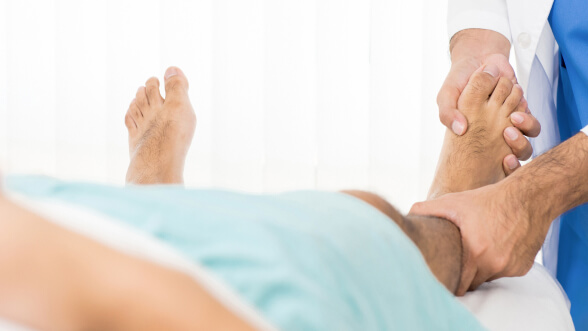
You should have your feet checked once a year by a healthcare professional. This is your chance to have an in-depth check and get answers to all of your questions. Find out about your risk of developing a foot problem and get advice if you should see a specialist or if you need to get your feet checked more regularly.
Foot health check takes approx 2 mins